


War Songs: Canadian & International
Music plays an integral role in our lives, shaping how we experience the world and express ourselves. It is a universal language used to convey emotion, share stories, and assert identity across cultures and generations. Even a simple string of chords can be used to express strong messages, emotions, and memories, or even inspire action. Whether it’s joy, sorrow, rebellion, or love, music allows us to articulate those feelings that words can’t capture.
Throughout history, music has been a powerful tool, especially to protest in times of war. It has been used as a voice for those who oppose violence, question authority, or mourn the consequences of conflict. Internationally, songs like Green Day’s “American Idiot” critiqued the American government, media, and the Iraq War, resonating with the youth who felt misrepresented by their government. In Canada, protest music has taken on a distinctive voice through artists such as Buffy Sainte-Marie and The Trews, who have used their platform to advocate for peace, commemorate sacrifice, and challenge narratives about war.
READER’S DISCRETION: SOME OF THESE SONGS MAY CONTAIN EXPLICIT LYRICS AND THEMES.
Canadian Music:
Highway of Heroes – The Trews:
The Highway of Heroes refers to the portion of Ontario’s Highway 401 between CFB Trenton and Toronto, used to transport fallen Canadian Armed Forces (CAF) members to their final resting place. The Highway of Heroes was officially designated in 2007 by the Ontario Government, becoming a national symbol of remembrance.
The song was inspired by Nichola Goddard, the first Canadian female CAF member killed in Afghanistan. While inspired by her story, the song pays tribute to all Canadian soldiers who have died in service.
Click here to read the lyrics.

Group photo of the Juno-Award nominated band, the Trews. (Credit: Nanaimo News Bulletin)
Fires of Calais – James Keelagahan
James Keelagahan is a folk singer-songwriter born in Calgary, AB, but now based in Perth, ON. His song is inspired by the harrowing events at the Battle of Dunkirk during the Second World War. Capturing the desperation, sacrifice, and resilience of those who fought to delay the German advance and ensure the evacuation of Allied troops. The song has a folk-like melody that highlights the story of the rescue of trapped soldiers behind enemy lines. The song also critiques the British government for their poor planning and relying on civilian volunteer to help with the evacuation.
“I could curse the men behind the desk who sell our lives away. I never signed abroad to save them from this bloody lack of planning.”
– Fires of Calais by James Keelagahan.
Click here to read the lyrics.

Portrait of James Keelaghan. (Credit: James Keelaghan)
Come All You Bold Canadians – Alan Mills (Rendition)
A classic Canadian folk tune dating back to the War of 1812. Originally, it was written by Private Cornelius Flummerfelt of the Third York Militia’s First Flank Company. Its most “recent” rendition is performed by Alan Mills, an influential Canadian folk singer-songwriter. The song calls upon Canadians to defend their homeland against American forces, blending national unity with folk-like traditional wartime storytelling, offering an early insight of Canadian identity and celebrates the British Canadian victory at Fort Detroit.
The performer of the song sings the song in a lively fashion, accompanied by a guitar, emphasizing its roots in oral tradition and community performance.
Click here to read the lyrics.
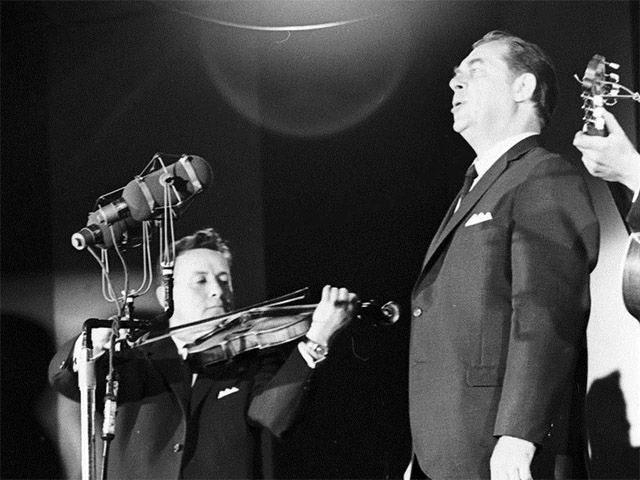
Alan Mills performing. (Credit: Maritime Music Directory International)
Written after the artist’s first visit to the Vimy Ridge Memorial in 2005, this song reflects on the Battle of Vimy Ridge during the First World War. Through heartfelt lyrics and a folk-like, somber melody, Hoyt portrays the story from the imagined perspective of her lover who fought in the battle.
Click here to read the lyrics.

Lizzy Hoyt performing. (Credit: Lizzy Hoyt)
Universal Soldier – Buffy Sainte-Marie
Universal Soldier was written in 1962 during the height of the Cold War, a period marked by intense political tension and the looming threat of nuclear conflict. The song calls for citizens to bear personal responsibility for the chaos caused by the political choices made in their name, including the leaders they elected. It urges listeners to shift the blame not against the soldiers, or the “little guys”, but at those who “know better” and the individuals who actively uphold unjust causes and those who turned a blind eye to the atrocities. By shifting the focus away from individual soldiers, the song delivers a power message about collective accountability.
“A song of war and peace, but mainly a song of personal responsibility which cries out not against the ‘little guy’ but against the ‘guy who knows better,’ against those who work or fight in an unjust cause, who turn their heads or shut their eyes or cross to the other side of the street.”
– Buffy Saint Marie for My Way!
Click here to read the lyrics.
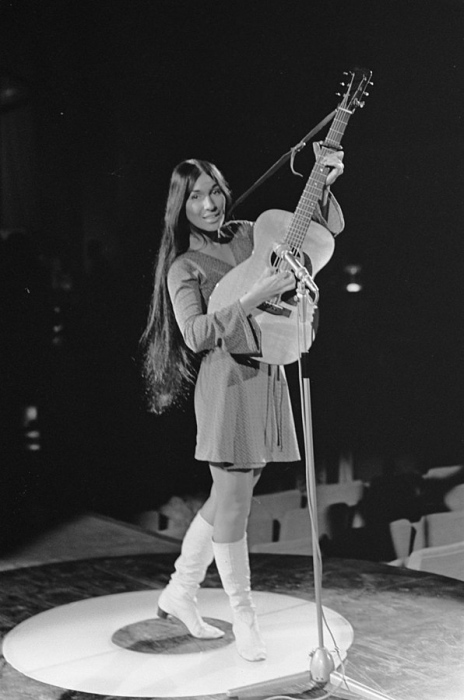
Buffy Sainte-Marie in 1968. (Credit: Netherlands National Archives via The Canadian Encyclopedia)
International Songs:
The song was written as an anti-violence and anti-war anthem, inspired by the 1993 IRA bombings in Warrington, England, which tragically claimed the lives of two young boys: Tim Parry and Johnathan Ball. The song’s dark and haunting tone, with raw lyrics, captures the anguish and devastation experienced by the victims and their families. Additionally, the word “zombie” is not used as a metaphor to describe the dead, but to describe people who are driven by hate, violence, and unable to feel empathy.
“This song is our cry against man’s inhumanity to man, inhumanity to child.”
– Dolores O’Riordan in 1994 at The Astoria venue, London, UK.
Click here to read the lyrics.
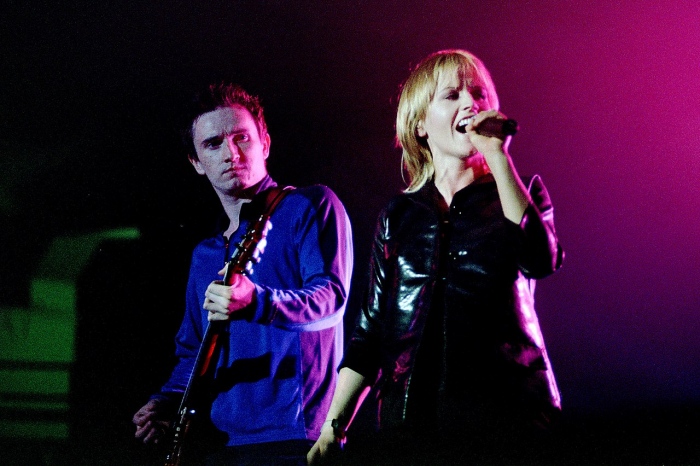
The Cranberries performing in Milan, 1999. From left to right: Noel Hogan, O’Riordan. (Credit: Fabio Diena via Wikipedia)
WARNING: CONTAINS EXPLICIT LYRICS
American Idiot is a bold protest the political climate of the early 2000s, particularly under the Bush Administration in the wake of the 9/11 attacks. The song criticizes the American media’s role in fearmongering, manipulation, and misinformation, portraying a nation plagued by what the band viewed as manufactured hysteria. The title itself, “American Idiot”, serves as a cultural wake-up call, warning listeners not to surrender their individuality or critical thinking in the face of state and media-driven conformity.
Green Day’s album “American Idiot” served as a warning to the American public: Don’t let the government take away your personality away or turn you into an American idiot.
Click here to read the lyrics.
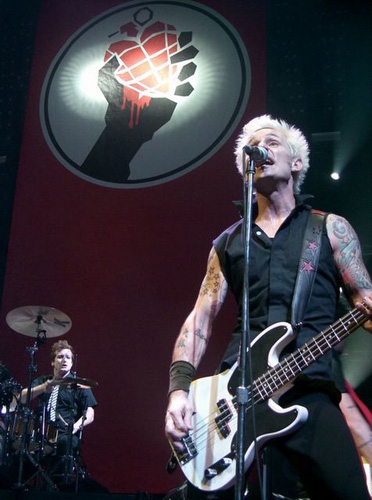
Tré Cool (bottom left) and Mike Dirnt (right) performing on July 27, 2005. (Credit: Lloyd Morgan via Wikipedia)
Fortunate Son – Creedence Clearwater Revival
The song is a powerful critique of the Vietnam War, focusing on the unfairness of the draft and draft dodgers. The song expresses how individuals from privileged or wealthy families, or the so-called “fortunate sons”, were often able to avoid conscription, while those who primarily came from the working-class and marginalized communities could not escape combat service.
The song’s writer, John Fogerty, was personally affected by the Vietnam draft and the social inequalities it exposed.
Click here to read the lyrics.
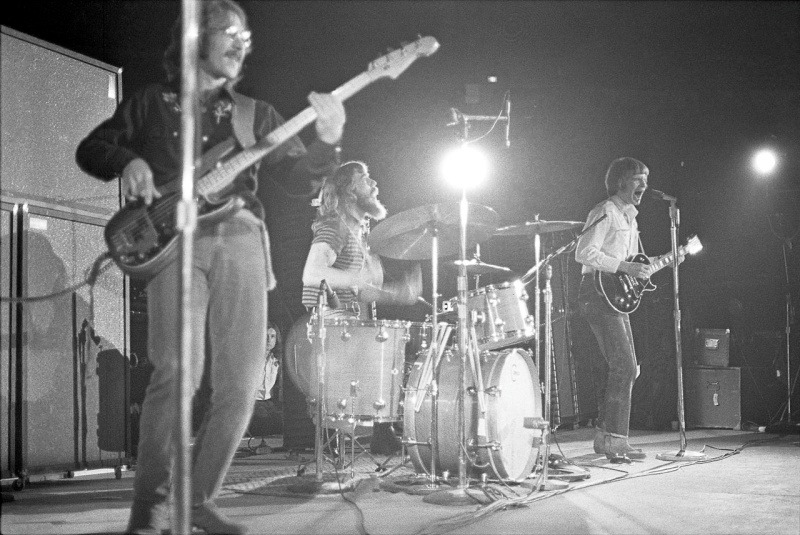
CCR in concert in Inglewood, California, December 1969. (Credit: Cal Montey/ Los Angeles Times via Wikipedia)
“War Pigs” metaphorically represents how the wealthy and powerful orchestrate wars for their gain while the poor and middle class take the brunt of the consequences. It also highlights the hypocrisy of draft-dodgers. The band members have officially acknowledged the song as anti-war – it was specifically opposed to the Vietnam War – and rebukes the political and economic forces that profit from war.
Click here to read the lyrics.
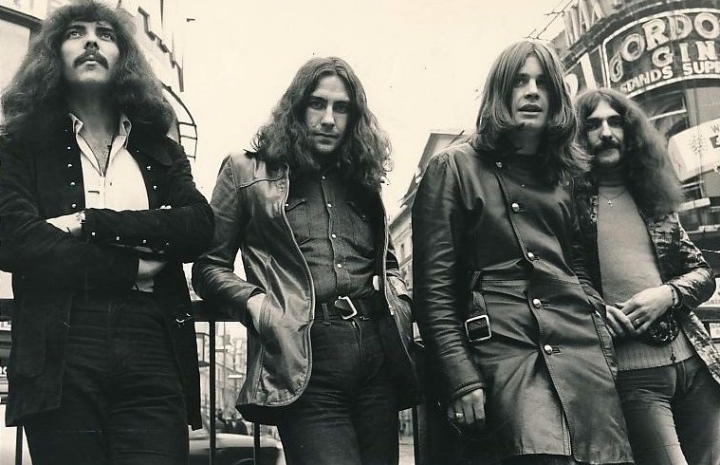
Black Sabbath at Piccadilly Circus, London in 1970. (left to right: Iommi, Ward, Osbourne, Butler) (Credit: Vertigo Records via Wikipedia)
This song is a tribute to Harry Patch, the last surviving British veteran from the First World War, who died on July 25th, 2009, at the age of 111. Harry Patch enlisted when he was 18 years old and fought in the Battle of Passchendaele. The lyrics are from the perspective of a soldier during the First World War, with modified quotations from Harry Patch himself. He was known to be an anti-war advocate who criticized war and its effects on people. Many interpret the song to be very sombre, including Harry Patch’s family: they approved of the song’s tone and message.
Click here to read the lyrics.
Main photo: Sainte-Marie playing the Peterborough Summer Festival of Lights on June 24, 2009. (Credit: Monica Vereana Williams via Wikipedia)
References:
BBC. “BBC NEWS | UK | WWI Veteran Patch Dies Aged 111,” n.d. http://news.bbc.co.uk/2/hi/uk_news/8168691.stm.
“Come All You Bold Canadians’ (U.S. National Park Service),” n.d. https://www.nps.gov/articles/bold-canadians.htm.
Ferrier, Aimee. “Harry Patch, the World War One Veteran That Inspired a Beautiful Radiohead Song.” Far Out Magazine, October 13, 2022. https://faroutmagazine.co.uk/world-war-one-veteran-inspired-radiohead-song/.
“Fires of Calais – James Keelaghan,” n.d. https://keelaghan.com/fires-of-calais.
GreenDay.fm. “The Story of American Idiot | GreenDay.fm,” n.d. https://greenday.fm/band/archive/the-story-of-american-idiot/#:~:text=In%20this%20song%2C%20the%20narrator,preferences%20(%E2%80%9Cmaybe%20I’m.
“How ‘Fortunate Son’ Became One of the Most Popular Anti-war Anthems.,” n.d. https://www.revisitingcreedence.com/culture/how-fortunate-son-became-one-of-the-most-popular-anti-war-anthems?ref=the-e-world.com.
Mejia. “IN DEPTH: UNIVERSAL SOLDIER,” May 9, 2022. https://buffysainte-marie.com/?p=809.
Patton, Alli, and Alli Patton. “Meaning Behind Black Sabbath’s Menacing Hit “War Pigs”” American Songwriter, May 25, 2023. https://americansongwriter.com/meaning-behind-black-sabbaths-menacing-hit-war-pigs/.
Rogers, Sue. “Highway of Heroes.” Bytown Ukulele Group, November 11, 2022. https://bytownukulele.ca/songs/highway-of-heroes/.
Savage, By Mark. “The Tragedy That Inspired Zombie – the Cranberries’ Biggest Hit,” January 16, 2018. https://www.bbc.com/news/entertainment-arts-42702781.
X, Radio. “The Harrowing True Story of Zombie by the Cranberries.” Radio X, January 15, 2024. https://www.radiox.co.uk/features/dolores-oriordan-cranberries-zombie-storymeaning/.