


No 6. Group: RCAF & Bomber Command
The campaigns led by Bomber Command were truly a multinational effort, requiring an immense amount of personnel, materials, and resources. This collective effort reflected the shared sacrifice and determination that the Allies put forward to weaken Nazi Germany.
Many squadrons across the Commonwealth served in the RAF Bomber Command, including those from Australia, New Zealand, and even South Africa. In addition, personnel from occupied nations, such as Poland, France, and Czechoslovakia (now the Czech Republic and Slovakia) brought valuable experience and determination to the campaign. The Royal Canadian Air Force (RCAF) played a significant role in the aerial bombing campaigns over Europe, with Canadians making up approximately one-third of Bomber Command personnel.
The No. 6 Group of the RCAF became operational on January 1, 1943, as an exclusively Canadian formation dedicated to Bomber Command. Canadian aircrews were organized within their national units under Canadian command, which created controversy and led to disputes between high-ranking British and Canadian officers. National pride was on the line for both the RCAF and the RAF.
Canadian women also served with the No.6 Group and at the RCAF’s British Headquarters; approximately 1,500 were stationed overseas in non-combative roles.
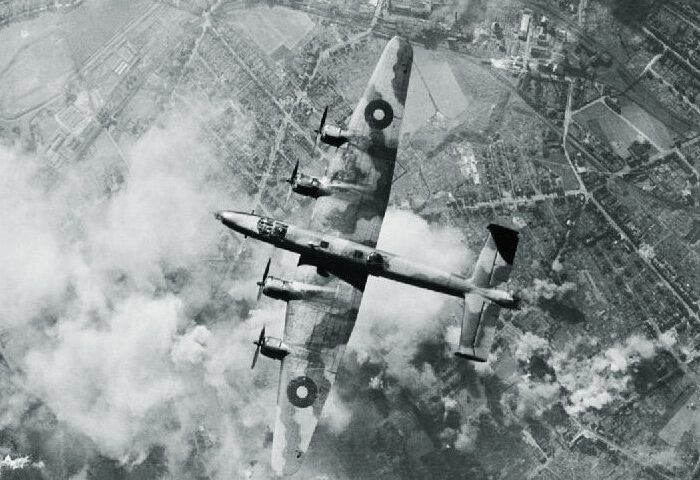
A Handley Page Halifax of No 6 Group flies over the smoke-obscured target during a daylight raid on the oil refinery at Wanne-Eickel in the Ruhr, 12 October 1944. (Credit: Imperial War Museums)
The No. 6 Group was equipped with older aircraft such as the Wellington and Halifax bombers, largely due to the limited supply of the newer Lancasters and the strategic decisions made within Bomber Command. These models were outdated and vulnerable, and their susceptibility to enemy defences limited the squadron’s operational effectiveness. Additionally, reliance on these aircraft created logistical and strategic challenges that made it difficult for the No.6 Group to participate in many high-profile bombing operations.
Initially, No. 6 Group experienced heavy losses, especially among its newer and less knowledgeable crews. Significant gaps in training and operational experience plagued the group; existing training programs often failed to properly prepare aircrews for the harsh and demanding conditions of Europe.
Despite these early challenges, the No. 6 Group earned a reputation as determined underdogs. By late 1943, Canadian squadrons had become comparable in effectiveness and strength to other RAF squadrons. This progress was made possible by the improvement of its training programs and ensuring aircrews were well familiarized with their aircraft. Better preparation and accumulated experience helped transform No.6 Group into a reliable part of Bomber Command.
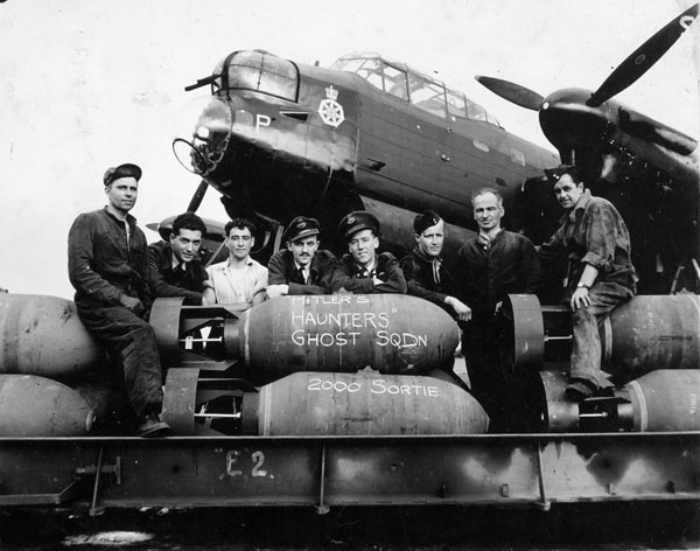
Main photo: No.6 Group Insignia. (Credit: Wikipedia)
References:
“Bomber Command – No. 6 Group and the Canadian Squadrons,” n.d. https://www.bombercommandmuseumarchives.ca/contribution.html.
“RCAF Bomber Squadrons Overseas : Juno Beach Centre,” n.d. https://www.junobeach.org/canada-in-wwii/articles/rcaf-bomber-squadrons-overseas/.