
The Holocaust: Resources & Research
From 1933 to 1945, Nazi Germany and its allies orchestrated the Holocaust, also referred to as the Shoah. Approximately, six million Jews were murdered under Adolf Hitler’s regime, along with millions of other victims, including Roma and Sinti peoples, people with disabilities, Poles and other Slavs, people of colour, political dissidents, prisoners of war, Jehovah’s Witnesses, masons, and members of the LGBTQ+ community. Behind every victim of the Holocaust and Nazi persecution was a human being: an individual with hopes, dreams, and a future that was unjustly taken.
The Holocaust developed in stages, beginning with antisemitic laws that stripped Jewish people of their rights and freedoms. Widespread social isolation resulted from these laws. Over time, more drastic measures were implemented, including forced deportations, confinement in overcrowded ghettos, and public executions by the Einsatzgruppen (Nazi death squads). Tragically, this escalated into industrialized, state-directed, murder carried out at extermination camps such as Auschwitz-Birkenau, Treblinka, and Belzec.
The Holocaust was not confined within Germany’s borders. With the support and encouragement of Nazi allies, who also assisted in enforcing Nazi policies, it spread far into Nazi-occupied Europe. Despite overwhelming risk, pockets of resistance emerged, led by the efforts of individuals who risked their lives to hide or rescue those in danger.
One such individual was Anne Frank, a young Jewish teenager who went into hiding with her family in Amsterdam, Netherlands. While in hiding, she documented her thoughts and experiences in a diary that would later become one of the most important testimonies of the Holocaust.
Despite stories of courage and resistance, the genocide continued. The Nazi regime continued its campaign of mass murder until they were defeated by the Allied Forces in May 1945. By then, millions of lives had already been snuffed out, and entire communities had been destroyed.
“Get it all on record now—get the films, get the witnesses—because somewhere down the road of history, some bastard will get up and say that this never happened.”
—President Dwight D. Eisenhower
In the decades following the Holocaust, survivors, researchers, and historians have dedicated themselves to preserving the memory and honouring the victims, making it their life’s work to ensure that the horrors are neither forgotten nor repeated. As Holocaust survivor and Nobel Peace Prize winner Elie Wiesel once stated:
“To forget would not only be dangerous but offensive; to forget the dead would be akin to killing them a second time.”
—Elie Wiesel
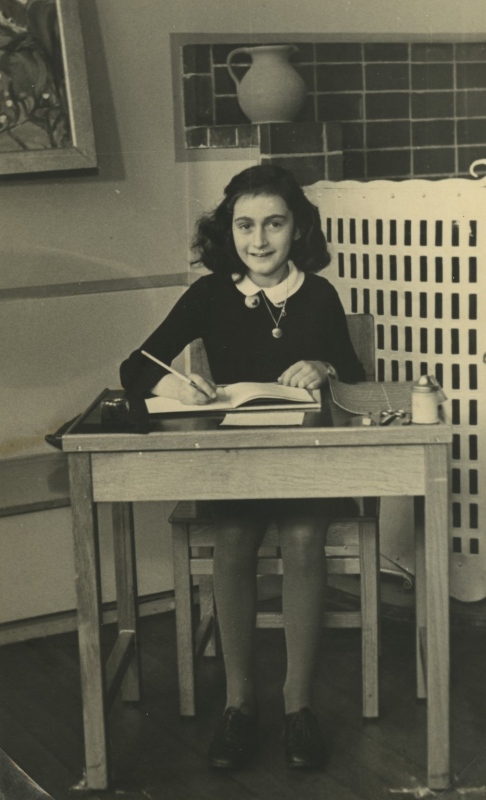
Anne Frank in her final year of primary school, 1940. (Credit: Anne Frank House)
Canada’s Contribution in Liberation, Commemoration, and Honouring
At the time, Canada’s restrictive immigration policies made it difficult for Jewish people seeking asylum to enter Canada. Those allowed to enter were interned as “enemy aliens” in camps across Canada. Between 1940 to 1943, only 2,300 Jewish peoples (mostly from Austria and Germany) were allowed into Canada and then interned. Many others were denied entry and had no choice but to return to Europe. Upon re-entry to Europe, they were met with a grim fate as most faced persecution or death.
Meanwhile, in Europe, Allied forces fought relentless battles to liberate Nazi concentration camps. In April 1945, Canadian forces liberated the Westbrook Transit Camp in the Netherlands, liberating approximately 900 Dutch Jews.
After the war, Canada accepted 40,000 Holocaust survivors into the country, offering them a chance to rebuild their lives. As part of Canada’s mission to remember and honour the victims of the Holocaust, Canada actively supports educational programs, commemorative events, and public initiatives aimed at promoting awareness and honouring the memory of the victims. Canada also upholds legislation designed to combat antisemitism, religious discrimination, hate speech, and racism.
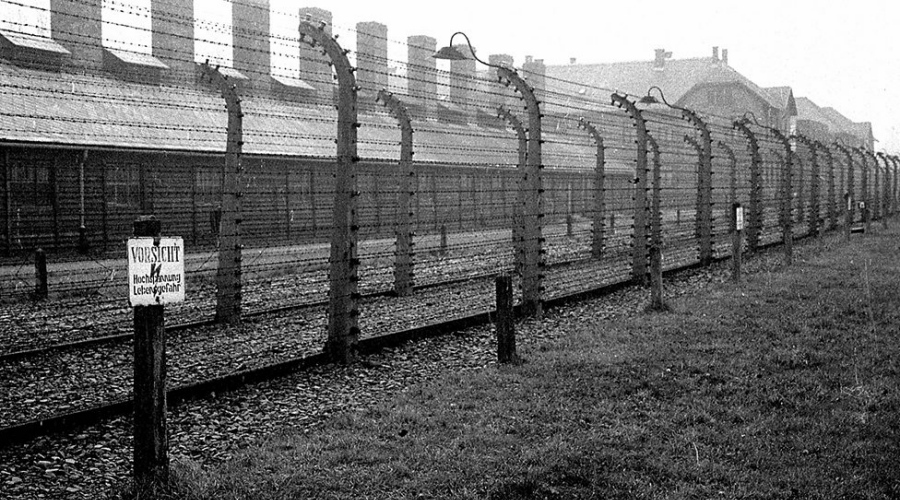
Auschwitz concentration camp, Poland. (Credit: BBC)
To learn more about the Holocaust, please explore any of the links below. This page serves as a starting point and source of inspiration for students, educators, and readers beginning their research into the history and legacy of the Holocaust.
Calgary/ AB- Resources:
• Calgary Jewish Federation – Holocaust and Human Rights Education: “The Remembrance and Education department of Calgary Jewish Federation is to promote acceptance, social justice, and human rights through education and remembrance of the Holocaust.”
Canadian-Specific Resources:
• Government of Canada Holocaust Resources: “Canada has invested significantly in Holocaust education, remembrance, and research. In conjunction with being the Chair of the International Holocaust Remembrance Alliance (IHRA) in 2013/2014, Canada supported several new initiatives to increase understanding of the Holocaust across the country.”
• Vancouver Holocaust Education Centre:“The Vancouver Holocaust Education Centre (VHEC) is devoted to Holocaust-based anti-racism education and commemoration.”
• Toronto Holocaust Museum: “The Toronto Holocaust Museum is a space for education and dialogue about this vital history and its ongoing relevance. The Museum serves as a powerful and growing force against antisemitism, bigotry, and hatred in all its forms.”
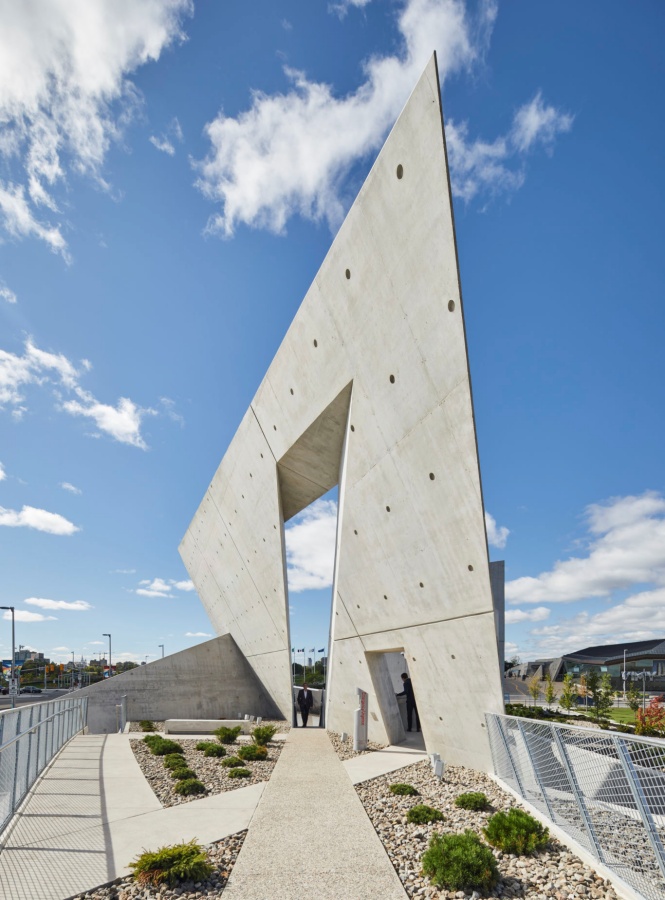
Canadian National Holocaust Monument. (Credit: National Capital Commission)
International Resources:
• International Holocaust Remembrance Alliance: “The International Holocaust Remembrance Alliance (IHRA) is an intergovernmental organization with 35 Member Countries and 8 Observer Countries. Founded in 1998 by former Swedish Prime Minister Göran Persson, we address issues related to the Holocaust and genocide of the Roma.”
• Holocaust Memorial Day Trust: “Holocaust Memorial Day Trust (HMDT) is the charity established and funded by the UK Government to promote and support Holocaust Memorial Day (HMD) in the UK.”
• USC Shoah Foundation – Visual History Archive: “Our mission is to collect, preserve, and share survivor testimonies in order to increase knowledge and understanding of the Holocaust and to build a future for all that rejects antisemitism, hatred, dehumanization, and genocide.”
• United States Holocaust Memorial Museum: “A living memorial to the Holocaust, the United States Holocaust Memorial Museum inspires citizens and leaders worldwide to confront antisemitism and hatred, prevent genocide, and promote human dignity.”
• Echoes & Reflections: “Echoes & Reflections provides educators with the resources and professional development necessary to develop the motivation, knowledge, and capacity required to teach the Holocaust responsibly, accurately, and effectively.”
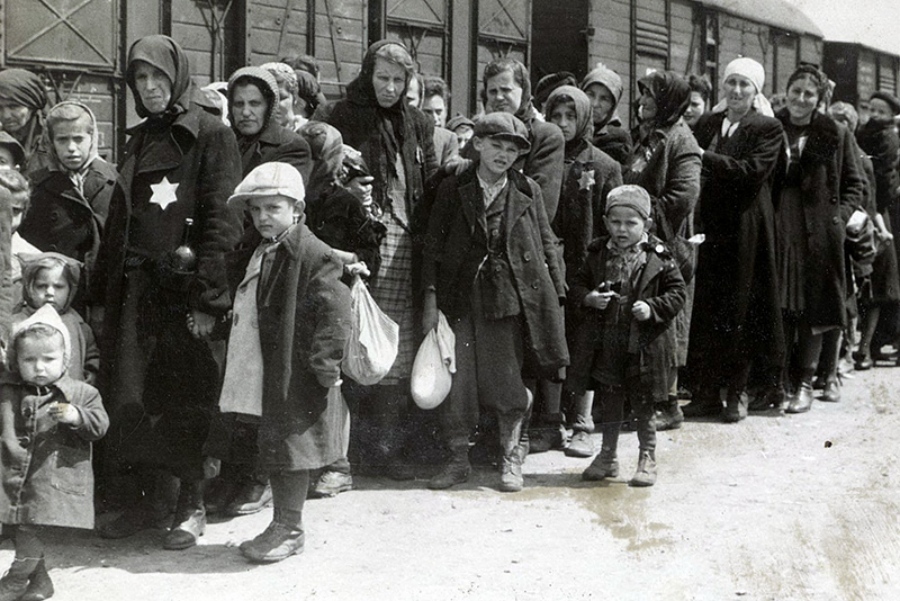
Main photo: Jewish women and children rallied to be processed. (Credit: Yad Vashem)
References:
Echoes & Reflections. “Homepage – Echoes &Amp; Reflections,” January 21, 2025. https://echoesandreflections.org/.
EEAS. “International Holocaust Remembrance Day: Statement by the High Representative/Vice-President Josep Borrell,” n.d. https://www.eeas.europa.eu/eeas/international-holocaust-remembrance-day-statement-high-representativevice-president-josep-borrell-0_en.
Heritage, Canadian. “History of Canada and the Holocaust.” Canada.ca, November 22, 2024. https://www.canada.ca/en/canadian-heritage/services/canada-holocaust/history.html.
“Home Page | USC Shoah Foundation,” n.d. https://sfi.usc.edu/.
Musée De L’Holocauste Montréal. “Montreal Holocaust Museum | Learn About the Holocaust History,” June 14, 2024. https://museeholocauste.ca/en/.
“Primary Source Databases – United States Holocaust Memorial Museum,” n.d. https://www.ushmm.org/collections/plan-a-research-visit/electronic-resources/primary-source-databases.
Toronto Holocaust Museum. “Toronto Holocaust Museum – a Museum by UJA,” n.d. https://www.holocaustcentre.com/.